Reconstruction & Build-Back

Serving all of Downriver · Open 24/7 · (734) 371-5880

Residents of Allen Park know all too well how Michigan's severe winters can take a toll on their homes, especially the post-war housing with aging infrastructure. When freezing pipes burst or sump pumps fail, resulting basement water damage demands not just immediate attention, but a comprehensive reconstruction and build-back process. At United Water Restoration Group of Downriver, our team provides expert rebuild services designed to restore your home to pre-loss condition. Local residents trust us to navigate these challenges, and when you call (734) 371-5880, our licensed professionals quickly mobilize to assess the damage, manage the repairs, and guide you through the recovery process.

  • Expert knowledge of local building codes
  • Comprehensive reconstruction and build-back
  • Seamless insurance claims assistance
  • Licensed and insured contractors
  • Attention to detail in every finish
  • Efficient, single point of contact management

Understanding Reconstruction Needs in Downriver

In Downriver, homes often experience water damage due to severe weather patterns like heavy snowfalls and summer thunderstorms. These can lead to significant structural issues, demanding expert repair and reconstruction. Our team at United Water Restoration Group of Downriver is well-versed in understanding the unique needs of homes in neighborhoods like Taylor and Lincoln Park, which often have older building materials that require careful handling.

Our reconstruction and build-back services address everything from subfloor replacements to drywall hanging and finishing. With a strong knowledge of local building codes, we ensure that every repair not only restores your home but also meets the current safety standards. This involves meticulous planning, material selections tailored to match existing finishes, and attention to detail throughout the process.

Navigating Insurance and Permits

Managing insurance claims is often one of the most daunting aspects of home restoration after significant damage. At United Water Restoration Group of Downriver, we assist our clients through this process, ensuring that accurate documentation and assessments back up any claims. This helps in achieving a fair settlement, covering the full scope of work necessary for a comprehensive rebuild.

Additionally, dealing with building permits and inspections is a crucial step. Our team streamlines this process by ensuring all necessary permits are obtained and the build-back adheres to Downriver's specific building codes. This helps mitigate potential delays and ensures a seamless integration of new repairs with existing structures, such as framing and flooring, maintaining your home’s integrity.

Expert Restoration for Modern Homes

Reconstructing modern homes, such as those found in Canton and Monroe's newer subdivisions, requires different skill sets and considerations than older homes. Our expertise extends to addressing issues pertinent to newer constructions, such as insulation R-value adjustments, advanced flooring transitions, and high-efficiency HVAC integration.

We understand the importance of maintaining the aesthetic and functional aspects during the build-back process. Whether it’s replacing cabinetry and countertops or carefully executing trim carpentry and paint matching, our team takes the time to faithfully reproduce the home's original features while upgrading necessary components with high-quality, durable materials. Each step of the process is characterized by precise craftsmanship and a commitment to client satisfaction.

Common Causes We See in Downriver

  • Heavy rain leading to basement flooding
  • Frozen pipes bursting during winter
  • Roof damage from ice dams and storms
  • Sewer backups due to system failure
  • Old plumbing causing water leaks
  • Foundation cracks from shifting grounds
  • Wind damage disrupting roofing and siding
  • Fire damage requiring structural repairs

While You Wait for the Crew

A few minutes of the right first moves can save thousands in damage. Here is what to do — and what not to do — before we arrive.

Do

  • Document the damage with photos
  • Contact your insurance provider
  • Turn off water and electricity if safe
  • Move unharmed belongings to a safe area
  • Clear pathways for the restoration crew

Don’t

  • Do not attempt structural repairs yourself
  • Avoid using affected electrical outlets
  • Do not dispose of damaged materials before assessment
  • Refrain from delaying the call for professional help

Crews are standing by in Downriver right now.

Call (734) 371-5880

How It Works

Here Is What Happens When You Call

The hardest part of property damage is facing it on your own. You do not have to — from the first phone call, it is our job, not yours.

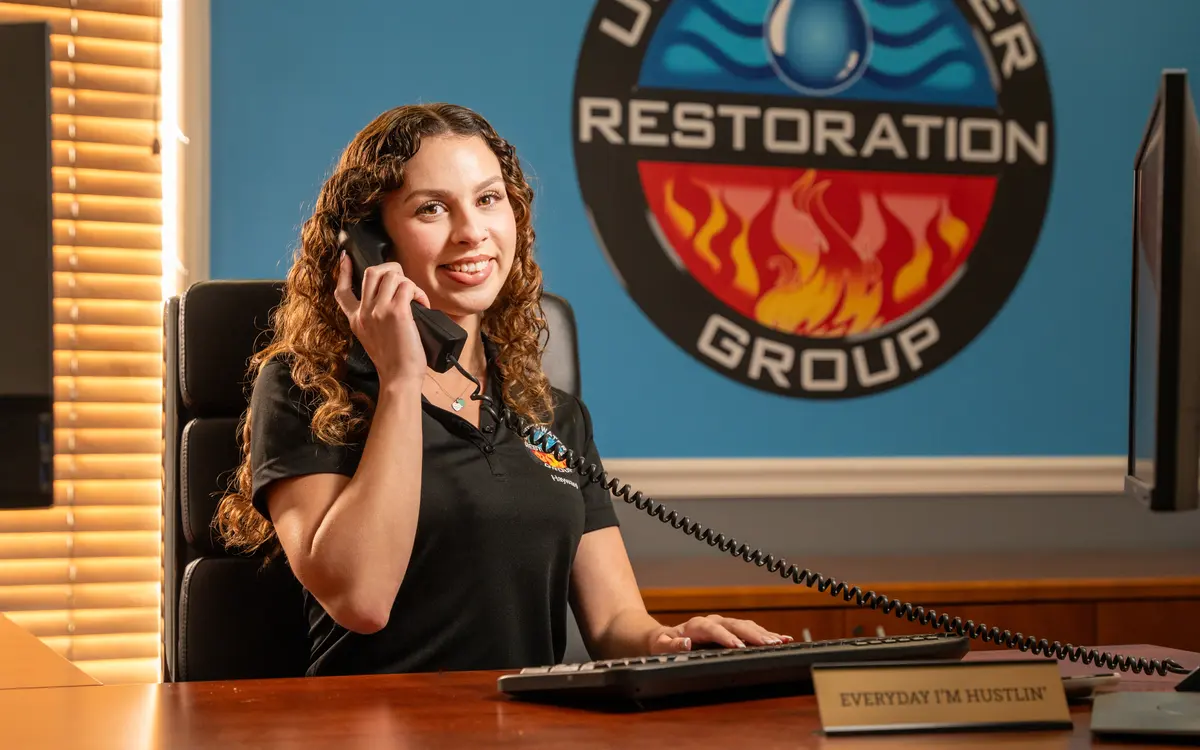
  1. A dispatcher at her desk answering the phone

    Step 01

    Initial Damage Assessment

    Our experts conduct a thorough assessment of the damaged area to determine the extent and nature of the damage. We then create a detailed restoration plan tailored to your home's needs.

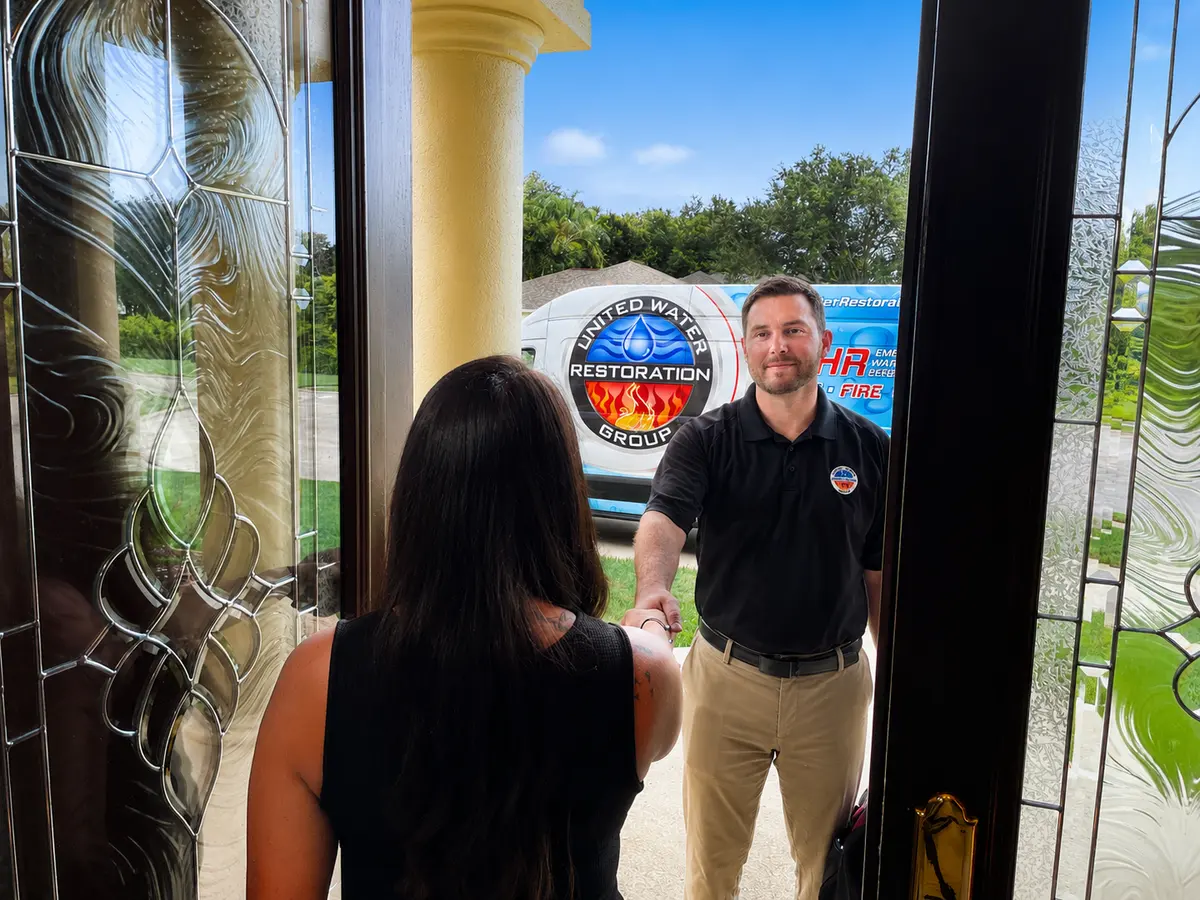
  2. A technician arriving at a homeowner’s front door to look at the damage

    Step 02

    Securing the Property

    To prevent further damage, we quickly secure the property by addressing immediate hazards. This includes board-ups, tarping, and temporary structural reinforcements as needed.

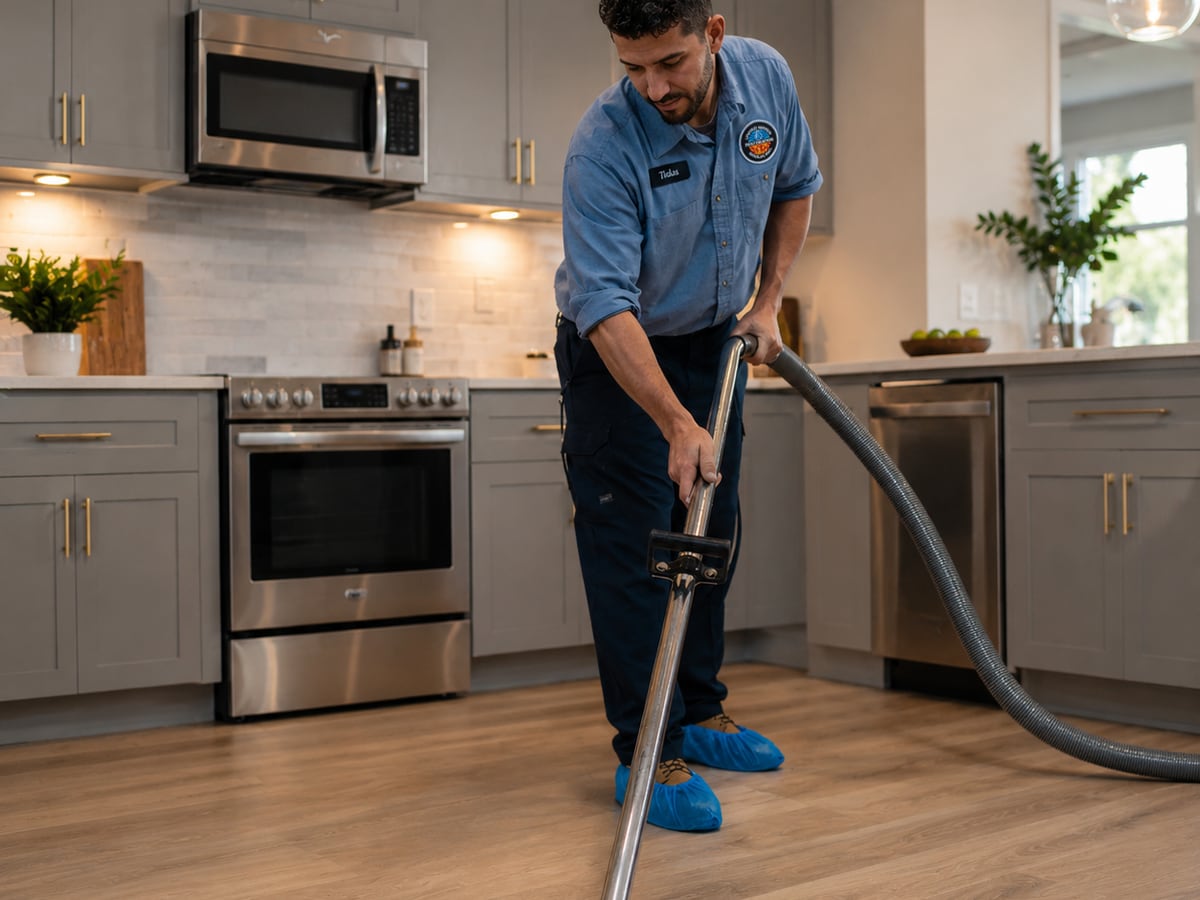
  3. A technician drawing water out of a kitchen floor with an extraction wand

    Step 03

    Obtaining Permits and Insurance Coordination

    We handle all the necessary permits and engage directly with your insurance provider to ensure that all repairs and costs are covered under your policy.

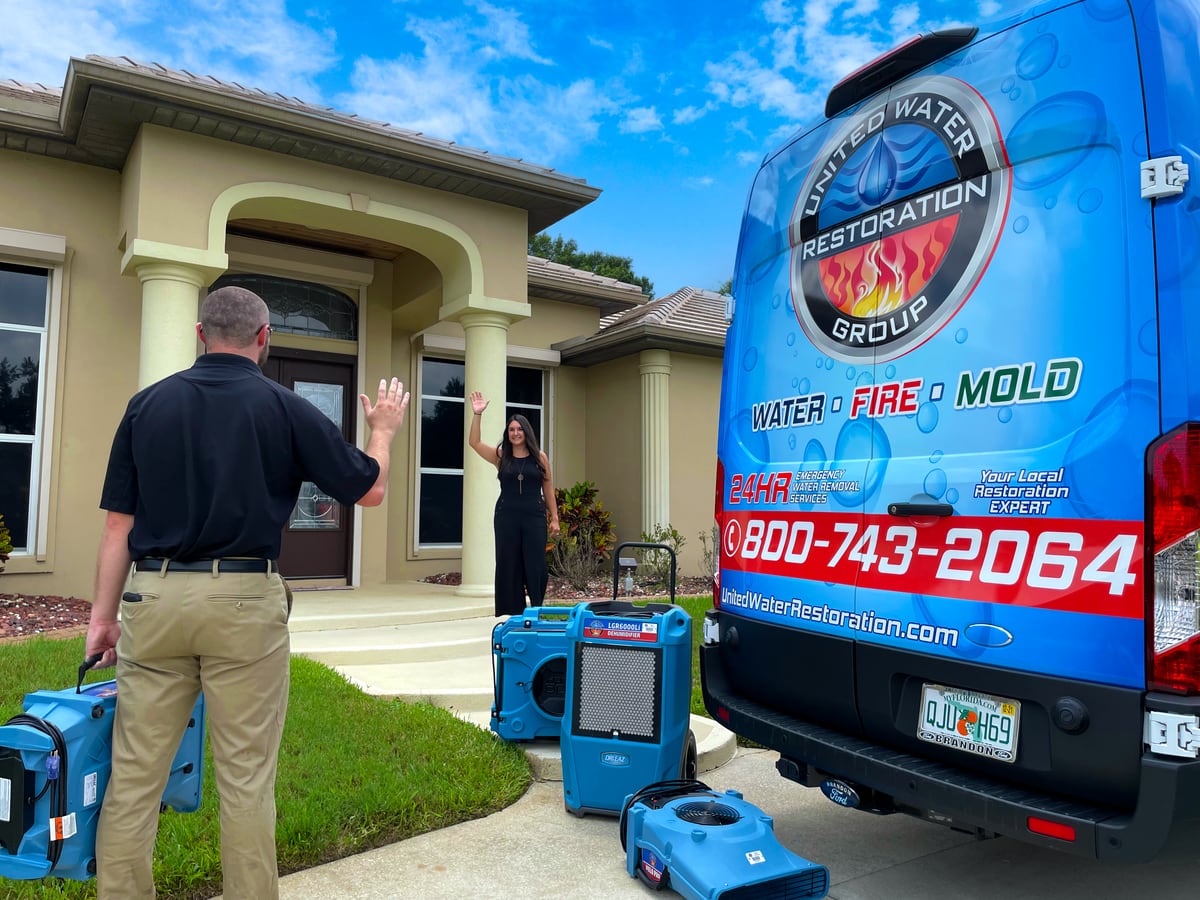
  4. A technician carrying equipment back to the van, waving to the homeowner at her door

    Step 04

    Reconstruction and Build-Back

    Our team performs necessary repairs, including drywall installation, flooring replacement, and structural framing. We ensure all work meets local building codes and standards.

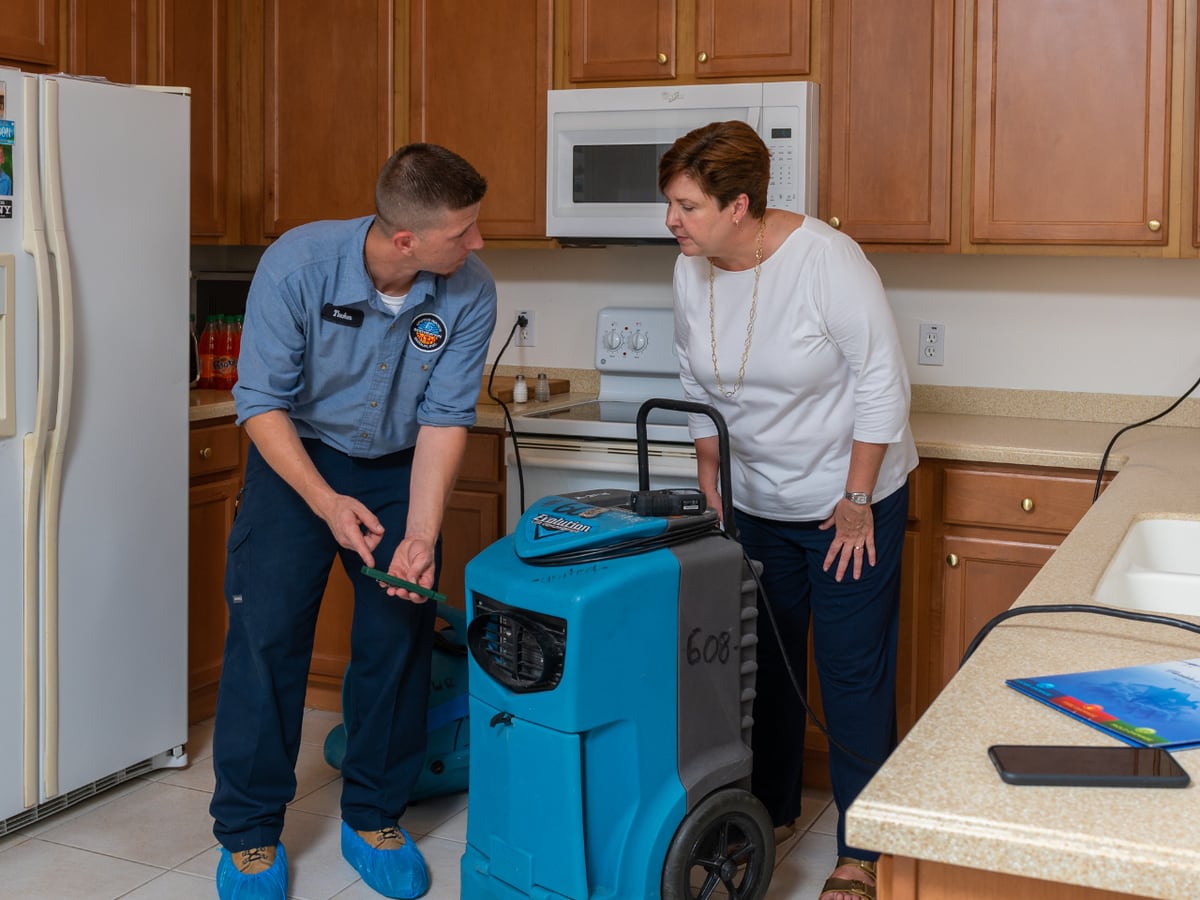
  5. Two technicians setting up drying equipment in a kitchen

    Step 05

    Final Walkthrough and Quality Assurance

    Upon completion, we conduct a detailed walkthrough with you to ensure every aspect of the restoration meets our high standards. We address any final concerns, making sure you’re fully satisfied.

We Work With Your Insurance

Restoration is stressful enough without fighting through a claim alone. Our crews document everything — photos, moisture readings, and a clear scope of work — in the format adjusters expect, and we communicate with your insurance company throughout the job. You always know what is happening and what your policy covers before work begins.

AllstateState FarmLiberty MutualProgressiveNationwideFarmers InsuranceAmerican Family InsuranceChubbUniversal Property & CasualtyHeritage Insurance
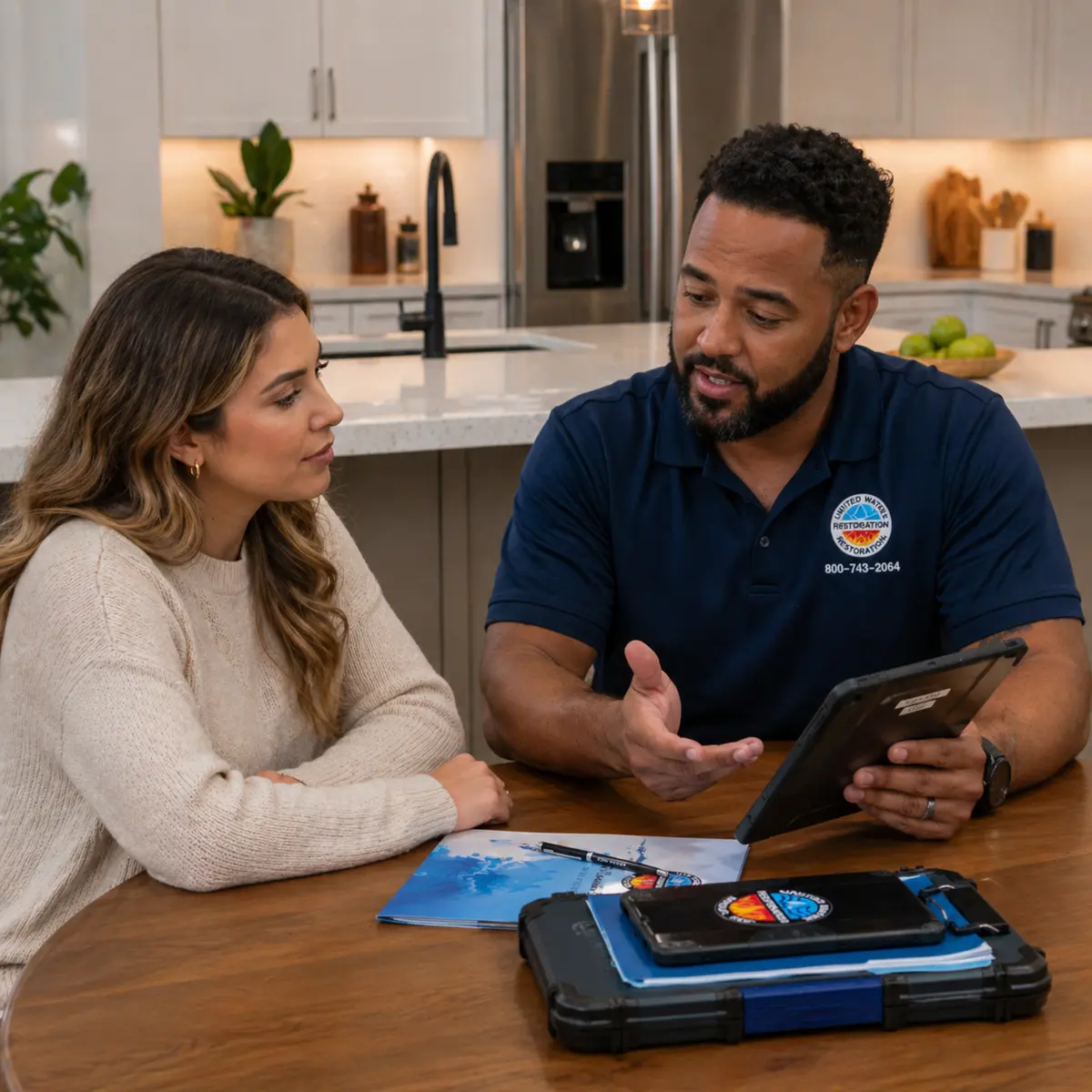
Technician walking a homeowner through the insurance scope on a tablet

What This Service Covers

Structural framing repairDrywall hanging and finishingRoof decking replacementKitchen and bathroom rebuildsFlooring and subfloor replacementCabinetry and countertop installationTrim carpentry and paint matchingInsulation replacementPlumbing and electrical repairsHVAC and air quality improvements

Reconstructing your home after a disaster doesn't have to be overwhelming. United Water Restoration Group of Downriver is dedicated to restoring your peace of mind with expert reconstruction services tailored to the Downriver area's unique needs. Whether it's handling complex repairs or ensuring every detail aligns with local codes, our team prioritizes quality and efficiency. Call us at (734) 371-5880 today, and let us help you seamlessly navigate your home's build-back process to a stronger, safer future.

Frequently Asked Questions

Do you rebuild and repair afterward, or only dry it out?

Both halves are one job. The first is mitigation — extraction, removing material that cannot be dried, and documented drying against a dry standard — and ANSI/IICRC S500 ties what has to come out to the water category, one through three. The second is reconstruction: framing repair, insulation, drywall, trim, paint and flooring put back. How much of each your loss needs depends on what the water reached, so that scope is written after the inspection.

Do you repair and repaint water-damaged drywall and ceilings?

Wet gypsum board and the insulation behind it usually come out rather than dry in place, and the cut is typically carried 12 to 24 inches above the visible water line because the material wicks upward past the stain. That put-back is part of the job: hanging, taping, three coats of compound with drying time between them, texture and paint. On homes built before 1978, the EPA's Renovation, Repair and Painting Rule governs how painted surfaces are disturbed.

Can one estimate cover both the cleanup and the rebuild, and what does the repair cost?

One inspection can produce both scopes, and carriers generally prefer it that way — mitigation and repair as line items in one claim file, priced from the Xactimate database the adjuster uses. No one should quote the repair figure sight unseen. It firms up when materials reach the dry standard ANSI/IICRC S500 requires and hidden damage is open to view, commonly three to five days of drying, though yours may need more or less. Any charge for the inspection is stated on the call.

Do you replace the flooring and subfloor, or do I hire a flooring contractor?

Subfloor, underlayment and finished flooring are all part of the repair scope, and so is the framing underneath when a joist is wet. Replacement goes back under the National Wood Flooring Association's installation guidance, which is why new wood cannot go down until the subfloor and the flooring are no more than two to four percentage points apart in moisture content. Whether a floor is dried in place or replaced depends on the material and the water category.

Does your own crew do the rebuild, or is the reconstruction subcontracted?

The rebuild usually stays on one contract, with the same project manager who ran the drying and a single claim file, though that varies by market. Which trades are in-house and which are outside trade partners varies too — drywall, paint, tile, cabinetry and flooring are not always the same crew, so ask on the call who will be in your home. Structural and electrical put-back is pulled under permit and inspected by the local building department, usually under the International Residential Code.

Will insurance pay for the rebuild, and how do repairs get approved?

Coverage for the repair usually rides on the same claim as the mitigation, and approval runs off the written scope rather than a lump sum: the adjuster reviews line items and the moisture logs ANSI/IICRC S500 calls for, then approves or asks for a supplement when something hidden turns up. Replacement-cost policies typically pay in two steps, actual cash value first and the held-back depreciation after the work is finished and invoiced. Like-kind-and-quality wording varies by policy, so read yours.

Can you repair just the damaged section, or does the whole floor or ceiling have to be replaced?

Patch repairs are common and often the right call. What forces a bigger replacement is the water itself: ANSI/IICRC S500 sorts water into Categories 1 through 3, and Category 3 means porous material in the wet zone comes out, however small that zone is. Assembly matters too — a single ceiling panel in a grid swaps out, while taped drywall and sheet goods have no seam to stop at. Matching is the other limit, since tile and flooring run in dye lots.

How long does the rebuild take once the drying is finished?

The rebuild cannot start until the structure meets the dry standard ANSI/IICRC S500 requires, because closing a wall over wet framing traps the moisture. After that, a single wet room — drywall hung, taped, three coats of compound with drying time between each, then paint and flooring — commonly runs a couple of weeks, while a loss across several rooms, cabinetry on order or a permit inspection runs longer. Your schedule depends on what the scope turns out to be.

Do you handle the finish work too — cabinets, vanities, baseboards, tile and grout?

Cabinets, vanities, countertops, baseboards, tile and grout are part of the put-back, and they are usually the last trades in because they go over finished surfaces. Substrate condition governs the tile: ANSI A108 allows no more than 1/8 inch of variation in 10 feet for tile with an edge 15 inches or longer, so a repaired floor gets flattened before setting. Which items are replaced and which are refinished depends on the material and how wet it got.

If only part of the floor got wet, is the rest of the continuous floor replaced so it matches?

Carriers generally pay to replace what the moisture readings document as wet, and whether the rest of an undamaged run comes with it turns on the policy's like-kind-and-quality wording and on whether the flooring continues through a doorway without a transition. Put that question to the adjuster in writing, with photographs, before the repair is approved. Most policies also include an appraisal provision — two appraisers and an umpire — for disputes over the amount of loss, and your state insurance department takes complaints.

Request Service Online

Tell us what happened and we will call you right back. For emergencies, calling (734) 371-5880 is always fastest — we answer 24/7.

A United Water Restoration Group of Downriver van heading out on an emergency call at sunset

In Case of Property Damage, Call:

734-371-5880

We answer around the clock and dispatch from right here in Romulus.

IICRC Certified · Water · Fire · Mold · 24/7 Emergency Response